Myths and Magic: The Most Legendary Moments in Roulette History


Myths and Magic: The Most Legendary Moments in Roulette History
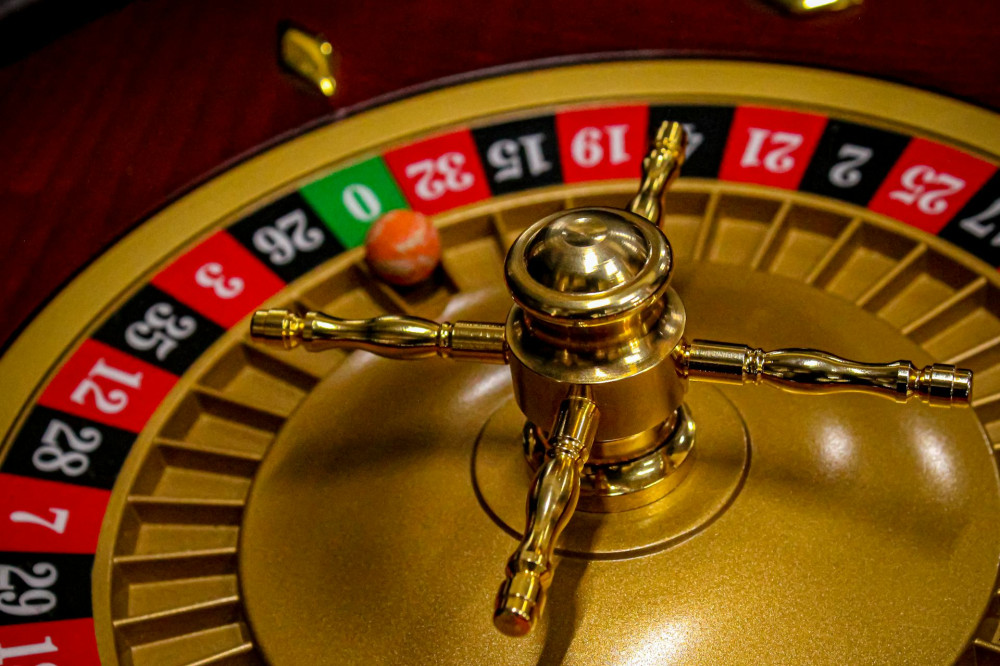
For more than two centuries, roulette has embodied the thrill of chance, the allure of risk, and the mystery of fate. The spinning wheel, the bouncing ivory ball, and that breathless pause before it lands have captivated everyone from European aristocrats to modern-day casino enthusiasts. Behind its elegant simplicity lies a treasure trove of stories—of fortune, genius, and sheer luck—that have shaped the game’s legendary status. Let’s take a spin through some of the most unforgettable moments in roulette history, where myth and reality often blur.
A Game Born from Science and Serendipity
Roulette’s origins trace back to 18th-century France, where mathematician Blaise Pascal inadvertently laid its foundation while experimenting with perpetual motion. His quest for endless movement produced a wheel that never quite stopped—an invention that would later evolve into a game ruled by chance rather than physics.
By the 19th century, roulette had become the crown jewel of Monte Carlo’s casinos. Nobles, adventurers, and dreamers flocked to the Riviera to test their luck under glittering chandeliers. It was here that roulette gained its aura of glamour and mystique—a place where logic met destiny, and fortunes could change with a single spin.
Charles Wells – The Man Who “Broke the Bank”
One of the most famous tales in roulette lore dates back to 1891, when Englishman Charles Wells walked into the Casino de Monte Carlo and, against all odds, “broke the bank.” He won so much money that the casino temporarily ran out of chips. Wells claimed to have a secret system, though most believed he was simply blessed with extraordinary luck.
His feat became so legendary that it inspired songs, books, and the enduring phrase “to break the bank.” Wells’ story remains a timeless reminder of roulette’s capricious nature—where one night’s fortune can rewrite history.
The Myth of the Monte Carlo Streak
In 1913, Monte Carlo witnessed one of the most astonishing events in gambling history. The ball landed on black 26 times in a row—a statistical anomaly with odds of roughly one in 60 million. Players who stubbornly bet on red lost everything, convinced that the next spin had to turn their way. The episode became a textbook example of the “gambler’s fallacy,” proving that in roulette, probability has no memory and luck answers to no one.
Science vs. Chance – The Battle of the Systems
Over the years, countless players have tried to outsmart the wheel. From the Martingale system, which doubles bets after each loss, to complex mathematical models, roulette has attracted both dreamers and data scientists. Yet no one has ever truly beaten the house in the long run.
In the 1970s, a group of physics students from the University of California attempted to do just that. Using tiny computers hidden in their shoes, they tried to predict the ball’s trajectory based on speed and angle. For a while, it worked—until casinos caught on and banned such devices. Their story lives on as a fascinating intersection of science, ingenuity, and the eternal human desire to defy chance.
Ashley Revell – All on Red
Fast forward to 2004, when British gambler Ashley Revell made modern roulette history in Las Vegas. He sold everything he owned—house, car, even his clothes—to bet his entire net worth of $135,300 on a single spin. The ball danced, slowed, and landed on red 7. Revell doubled his money in seconds and walked away a legend. His audacious gamble became a symbol of roulette’s essence: courage, risk, and the intoxicating belief that fortune favors the bold.
Roulette in American Culture
Roulette has long been more than a game—it’s a cultural icon. From Hollywood films where heroes stake everything on one number, to novels and art that use the wheel as a metaphor for life’s unpredictability, roulette continues to fascinate. In the United States, the game took on its own identity with the introduction of the double-zero wheel, giving American roulette a slightly higher house edge—and a reputation for even greater risk.
Today, whether in the dazzling casinos of Las Vegas or on digital platforms accessible from home, the magic endures. The spinning wheel remains a symbol of hope, daring, and the eternal dance between luck and logic.
Læs også:


The Legend Lives On
Roulette may be a simple game at its core, but its history is anything but ordinary. It’s a saga of invention, superstition, triumph, and heartbreak. Perhaps that’s why it continues to captivate us: because, like life itself, the wheel never stops turning—and no one can ever truly predict where the ball will land.
Læs også: